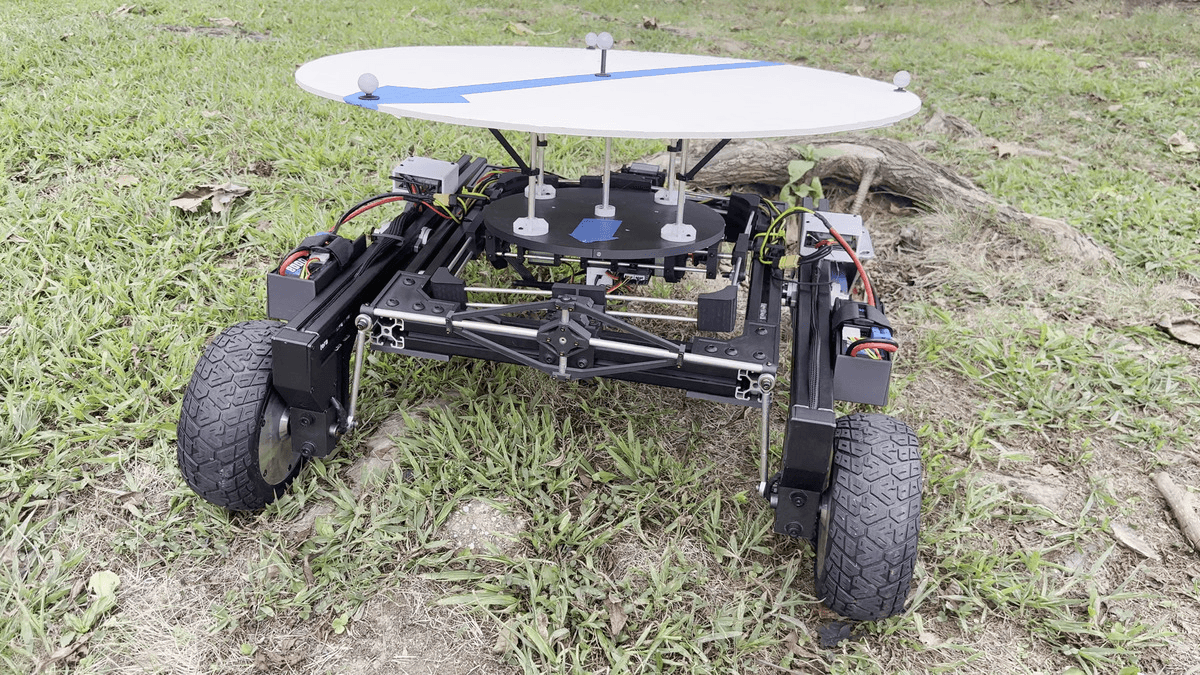
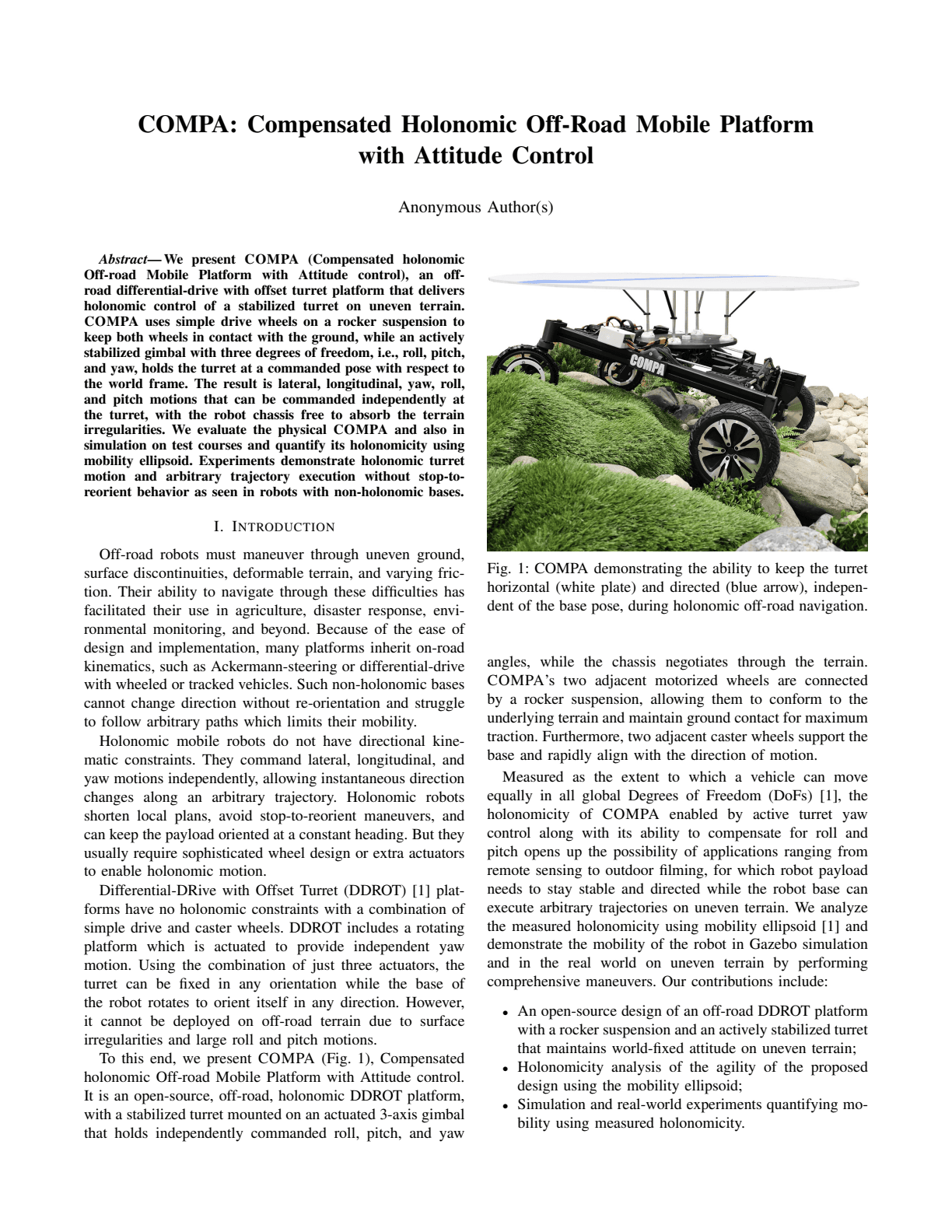
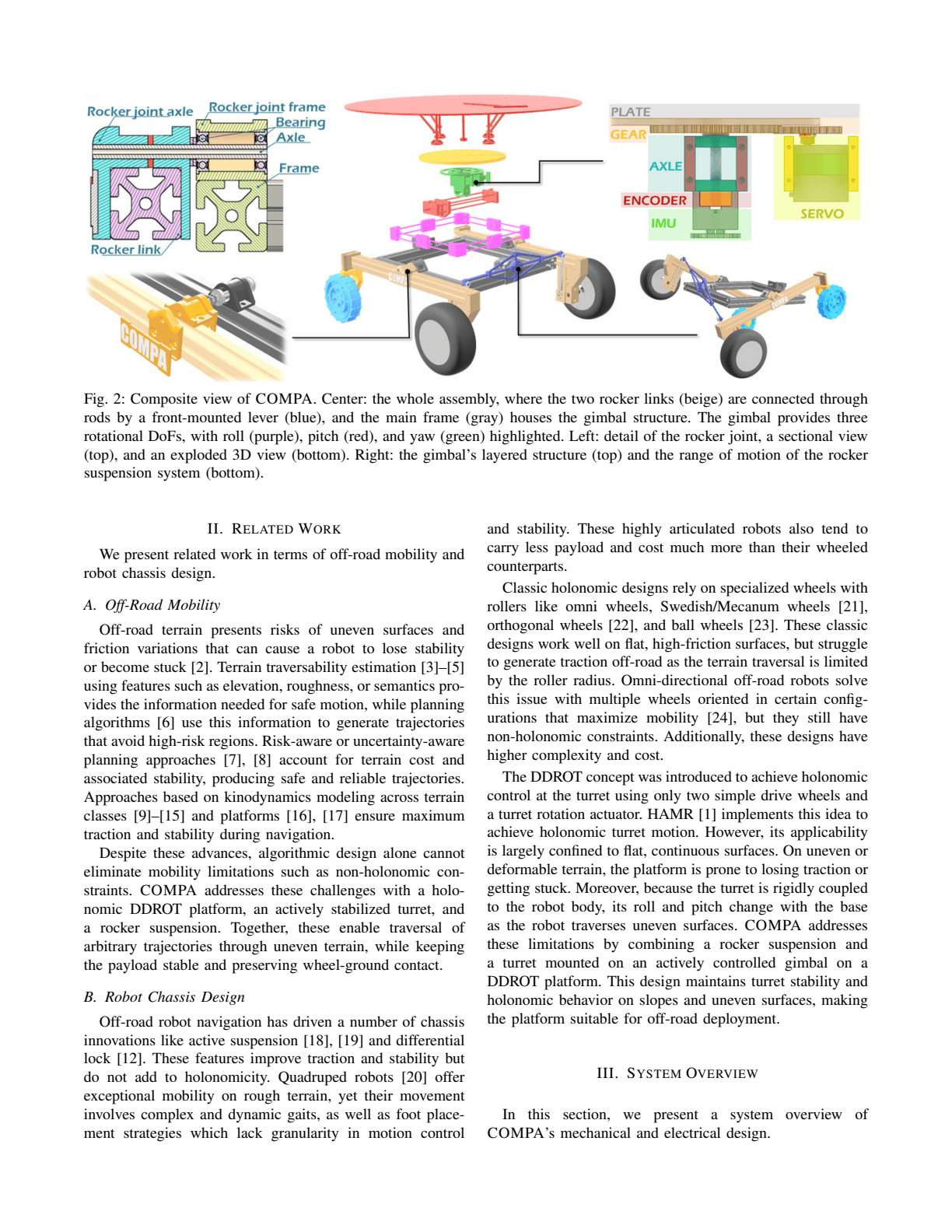
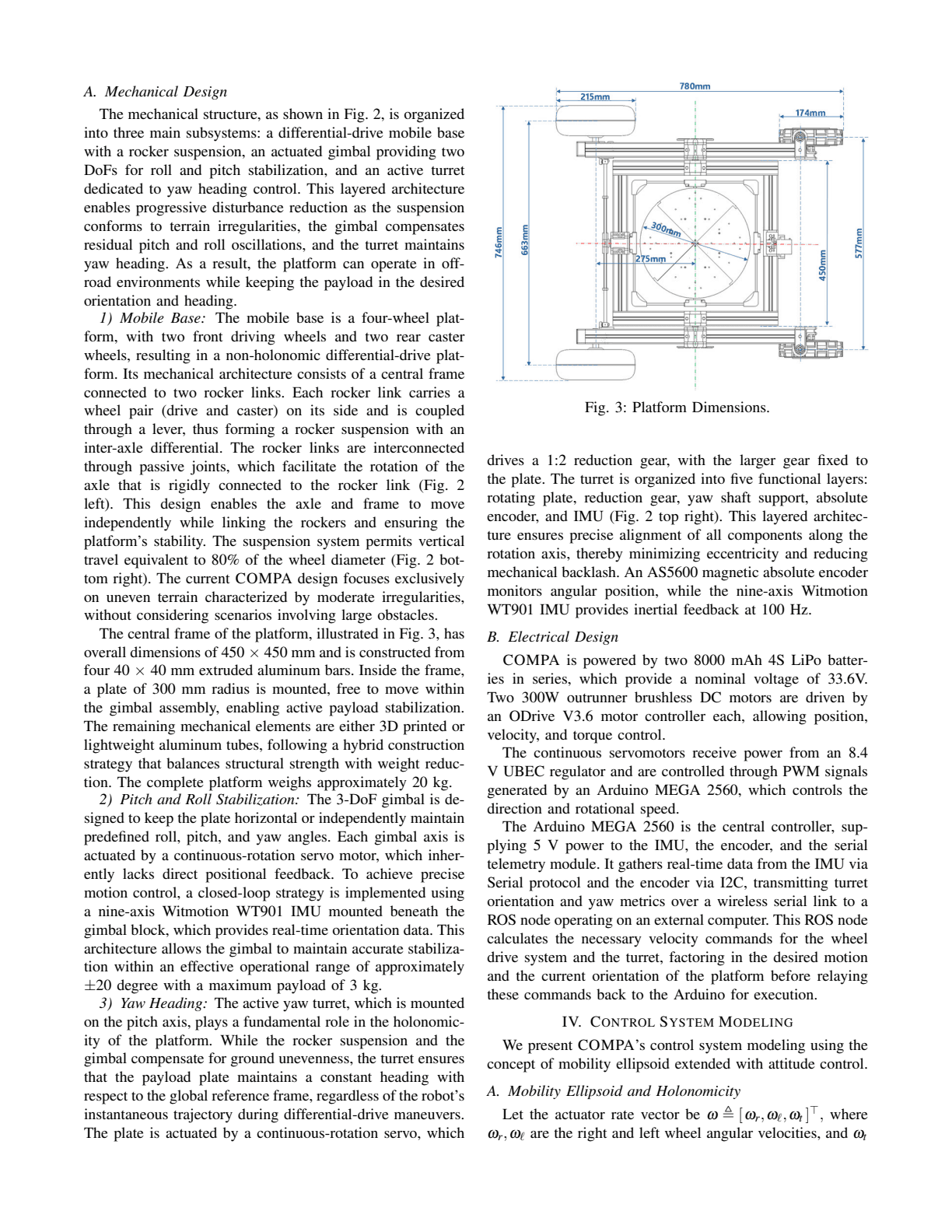
Research at Penn's GRASP ModLab (with George Mason University RobotiXX Lab) on COMPA / HAMR, a holonomic off-road robot with rocker suspension and a 3-DoF stabilized gimbal. I built the 2.5D simulation and control framework used to evaluate traversability-aware navigation over rough outdoor terrain, and validated the stack on the physical platform. Submitted to IROS 2026.
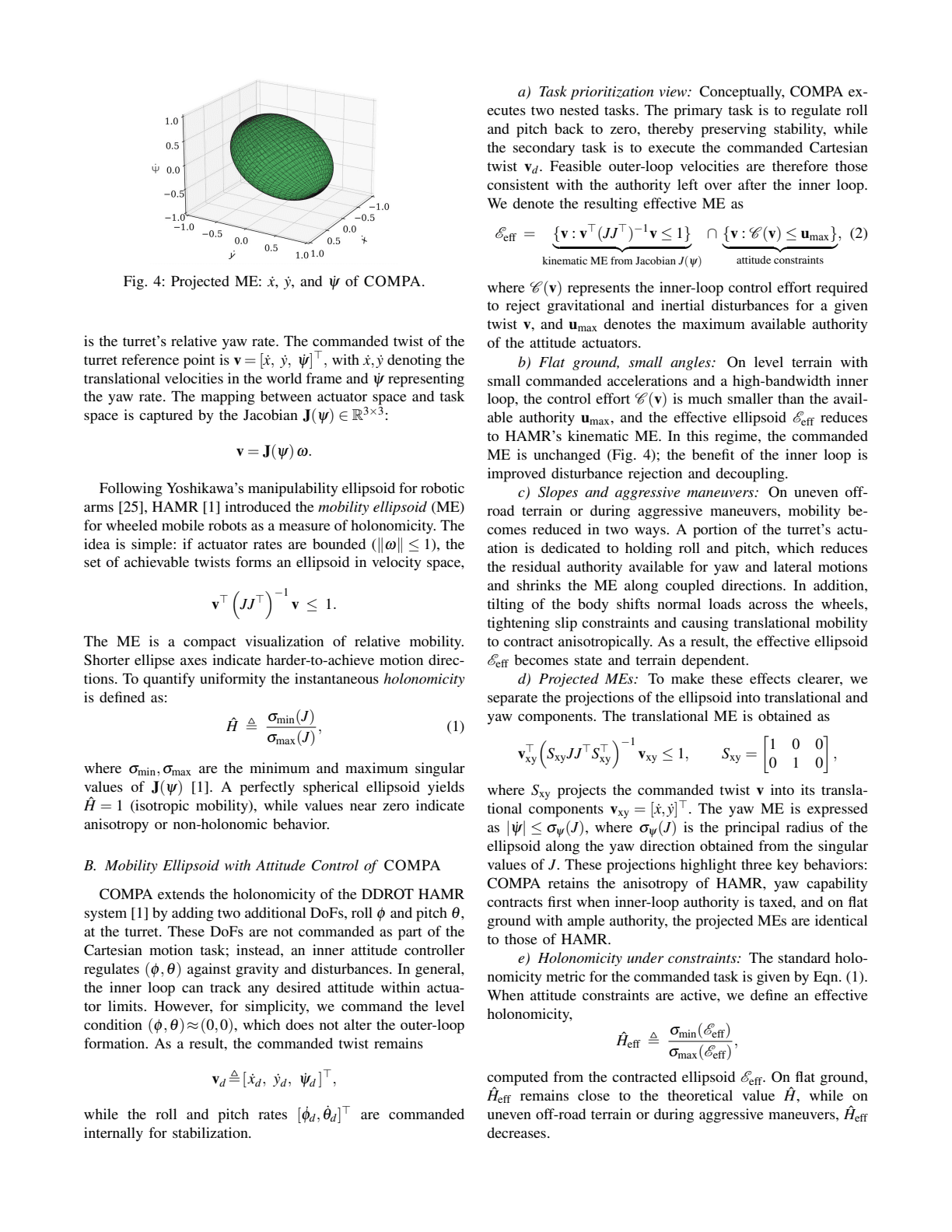
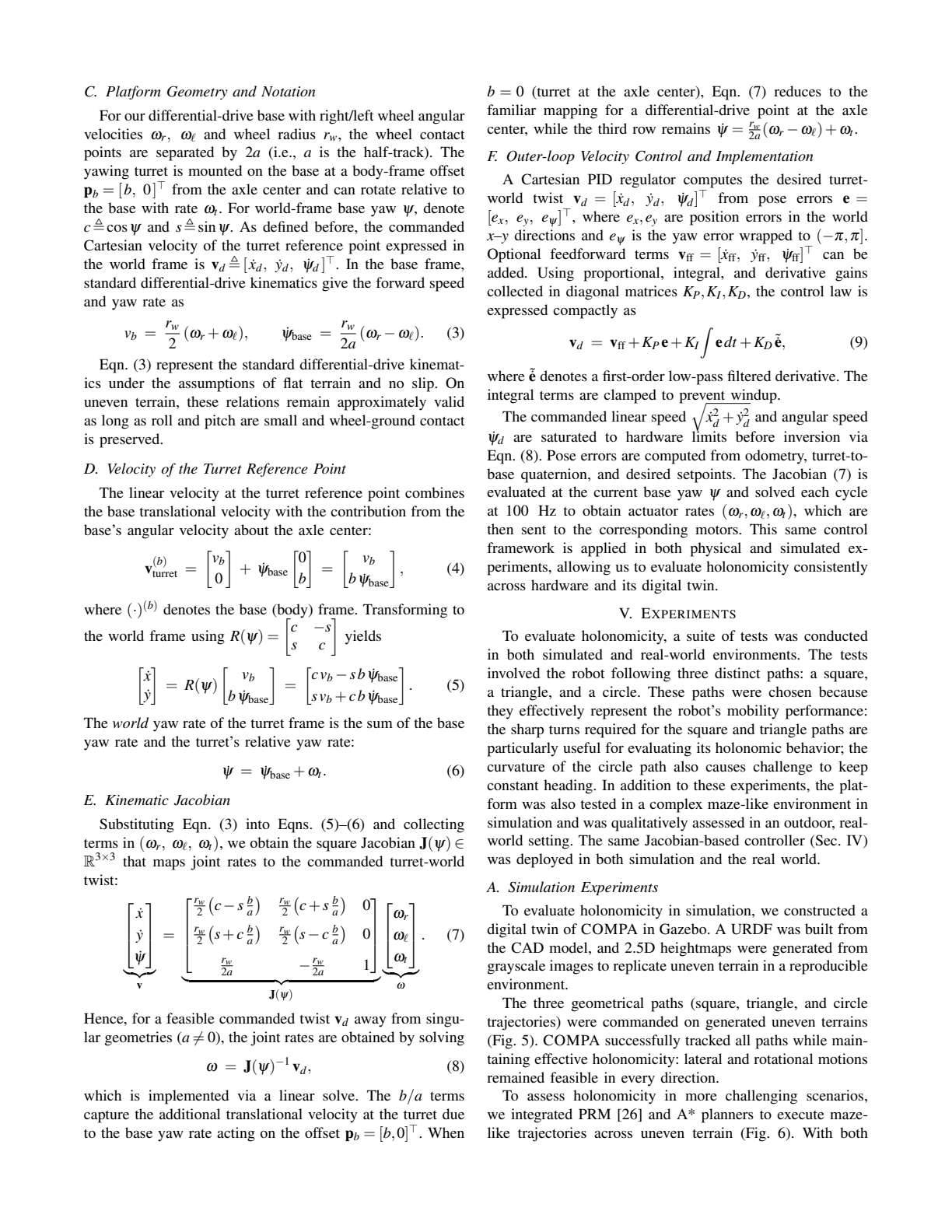
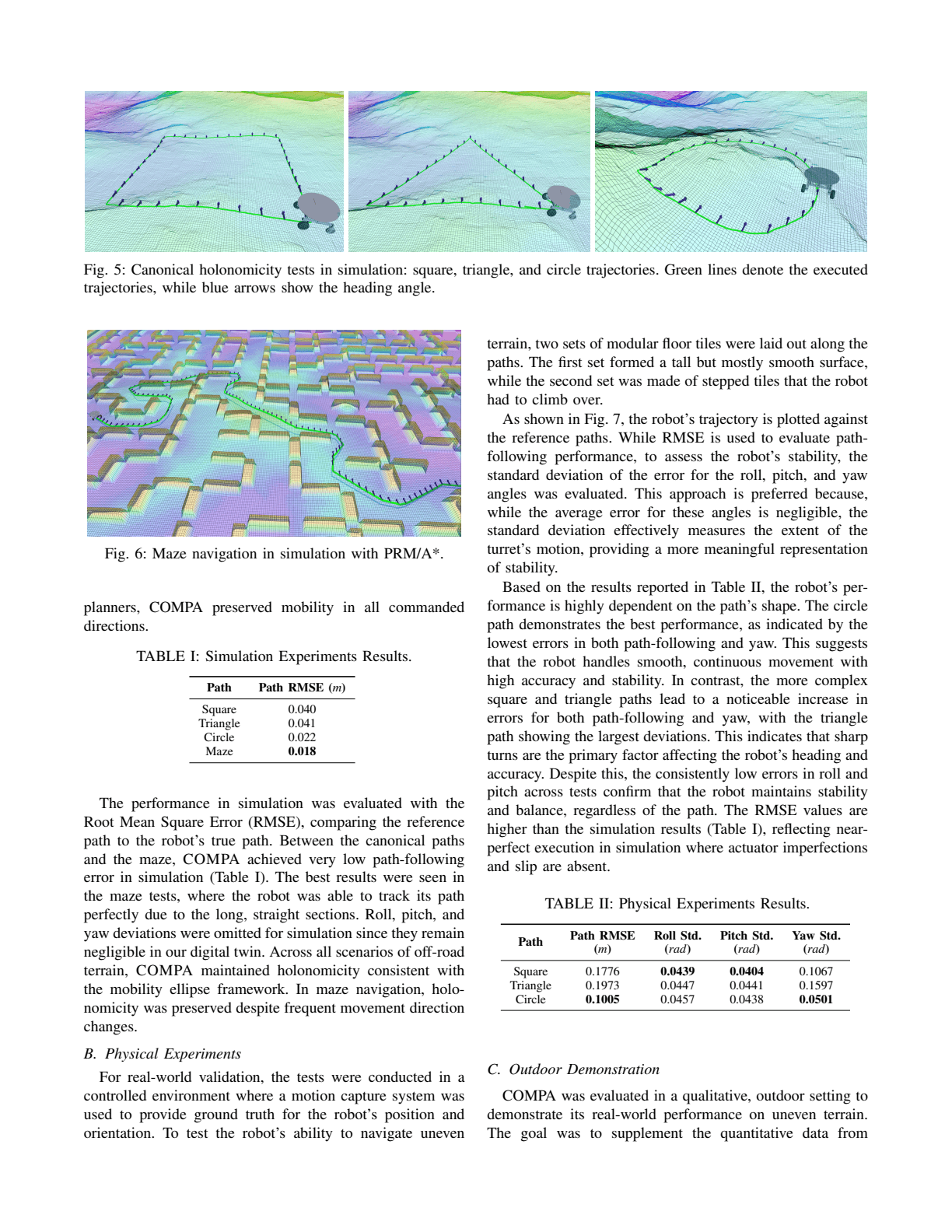
- Holonomic kinematics via differential-drive base + offset turret Jacobian — same controller in sim and on hardware
- ARA* (Anytime Repairing A*) global planner over 2.5D traversability cost maps
- MPC local control with traversability-aware costs (PyDrake)
- grid_map terrain layers + Gazebo heightmaps for sim-to-real
- Simulated RealSense RGB-D point clouds for traversability input
- ROS 2 Jazzy in C++ and Python; micro-ROS bridge to an Arduino Mega
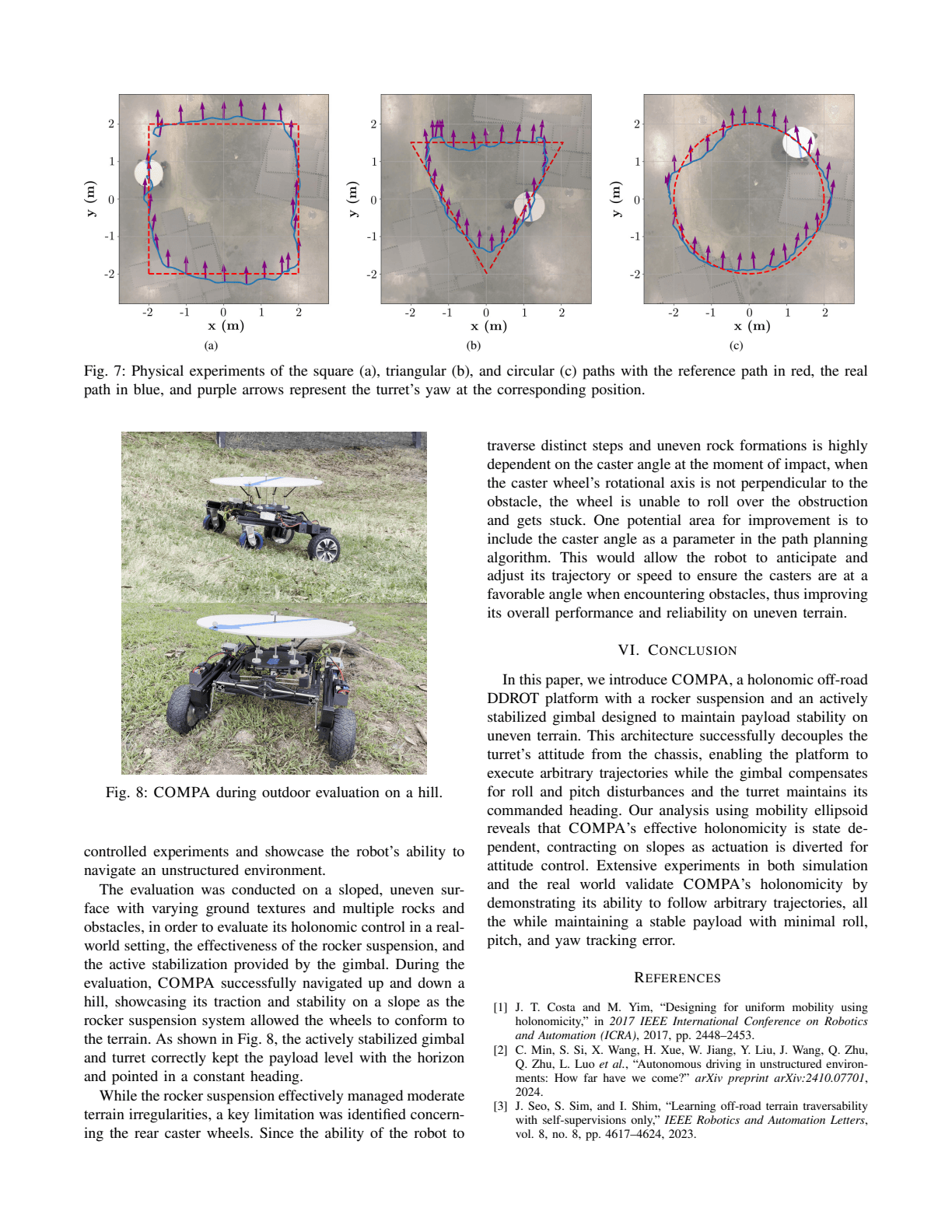
- Hardware validation on the rocker-suspension prototype with stabilized gimbal turret
Repos: https://github.com/cedrichld/hamr_holonomic_robot (high-level + simulation), https://github.com/virmani11kartik/HAMR_Controller (embedded).
Outdoor hardware testing
Outdoor hardware testing over uneven terrain
Simulation + planning stack
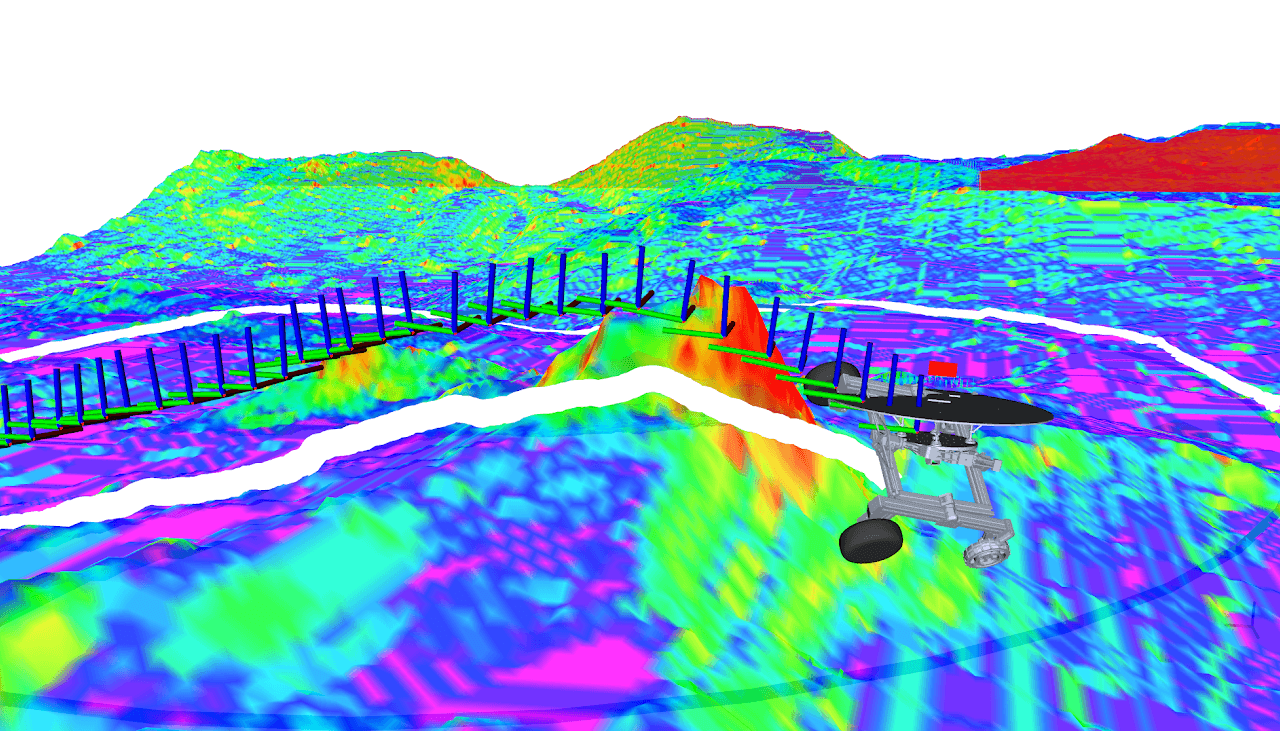
MPC simulation rollout in Gazebo on a 2.5D heightmap
Paper
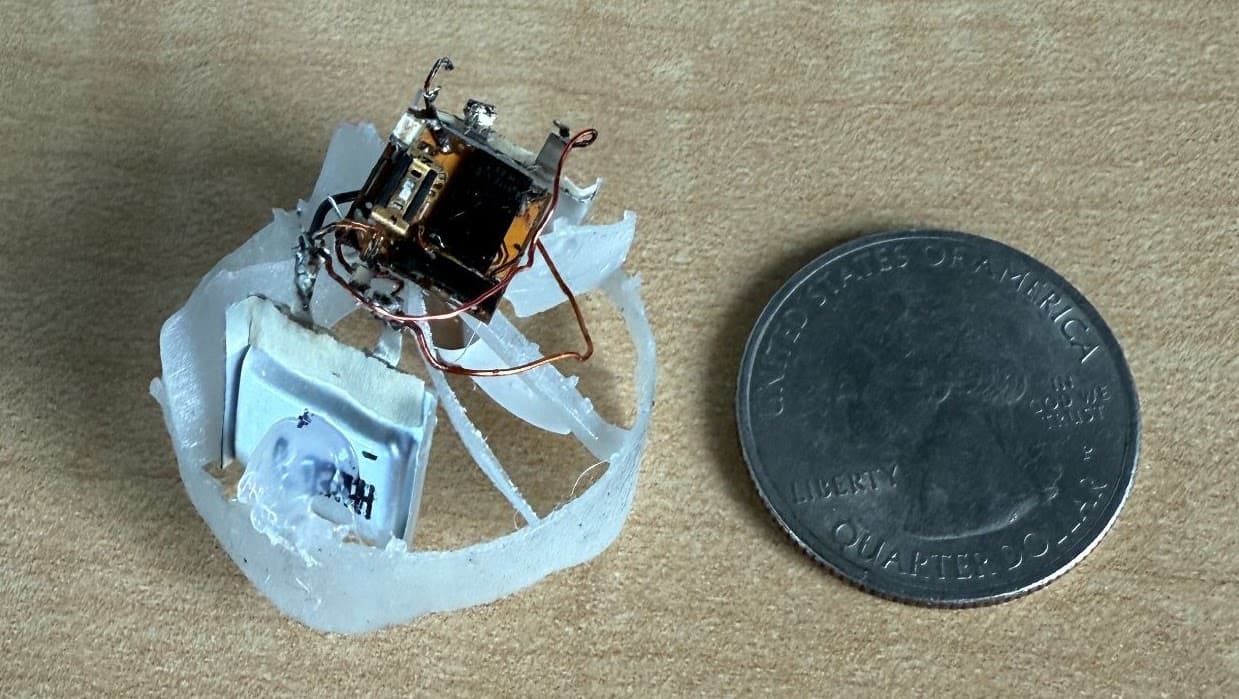
MiniP, the world's smallest self-powered drone
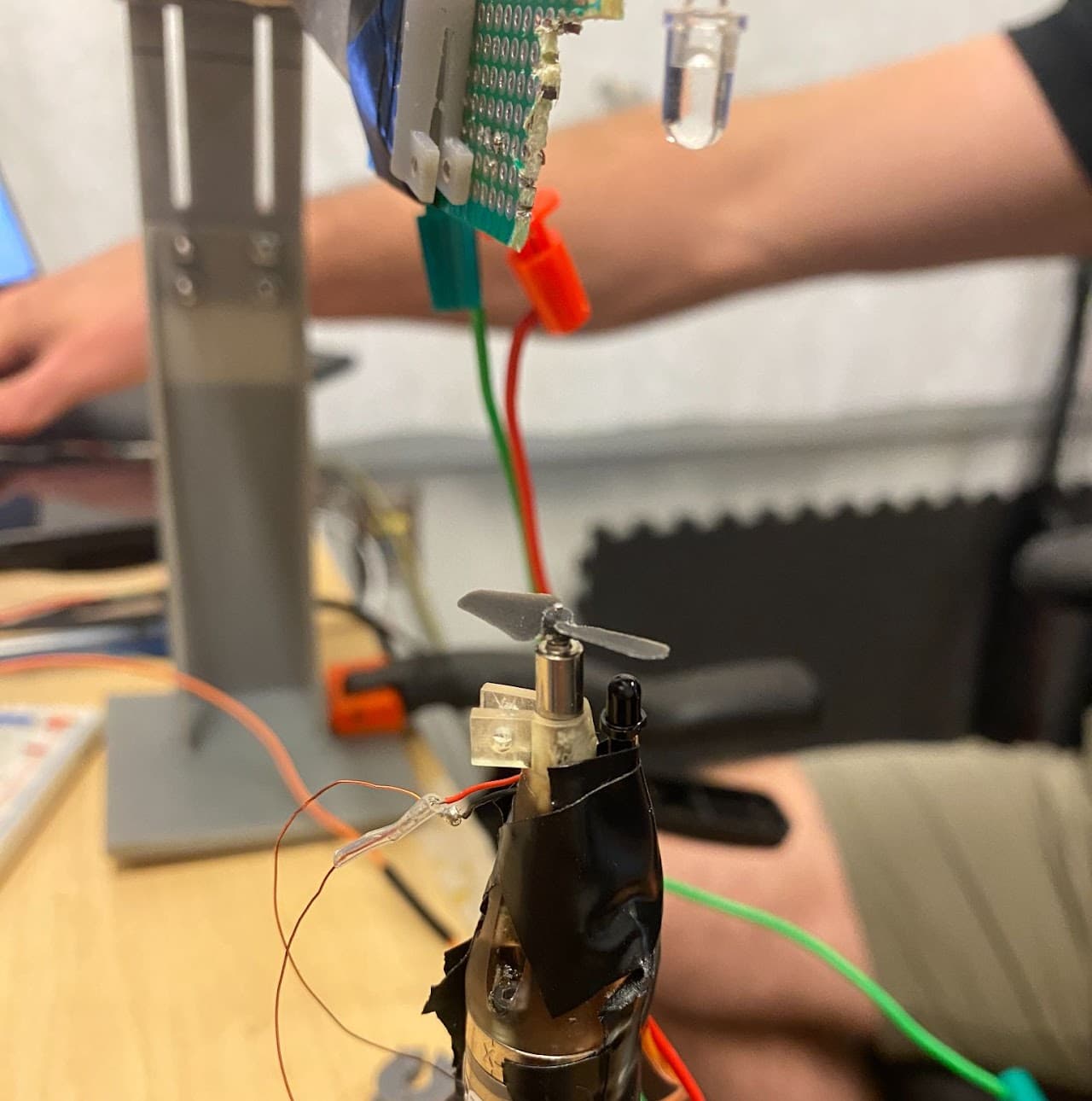
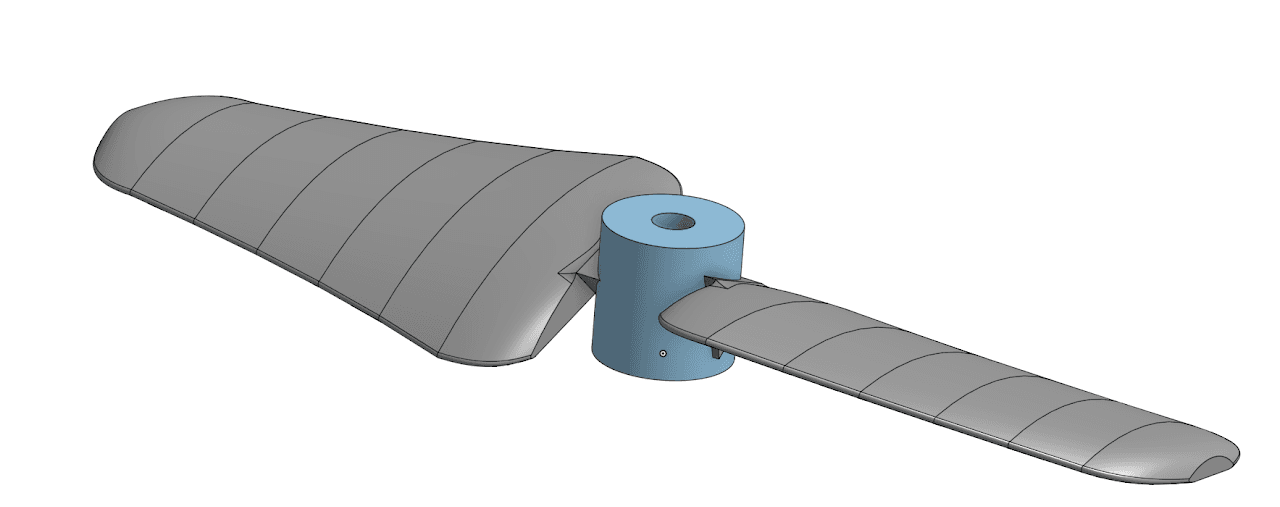
MiniP is a micro-aerial platform at ModLab that holds the Guinness World Record for the smallest self-powered drone. I joined the aerodynamics effort: modeling and optimizing micro-propeller geometry with Bayesian Optimization to maximize lift-to-drag at very small scales, under severe size, mass, and power constraints.
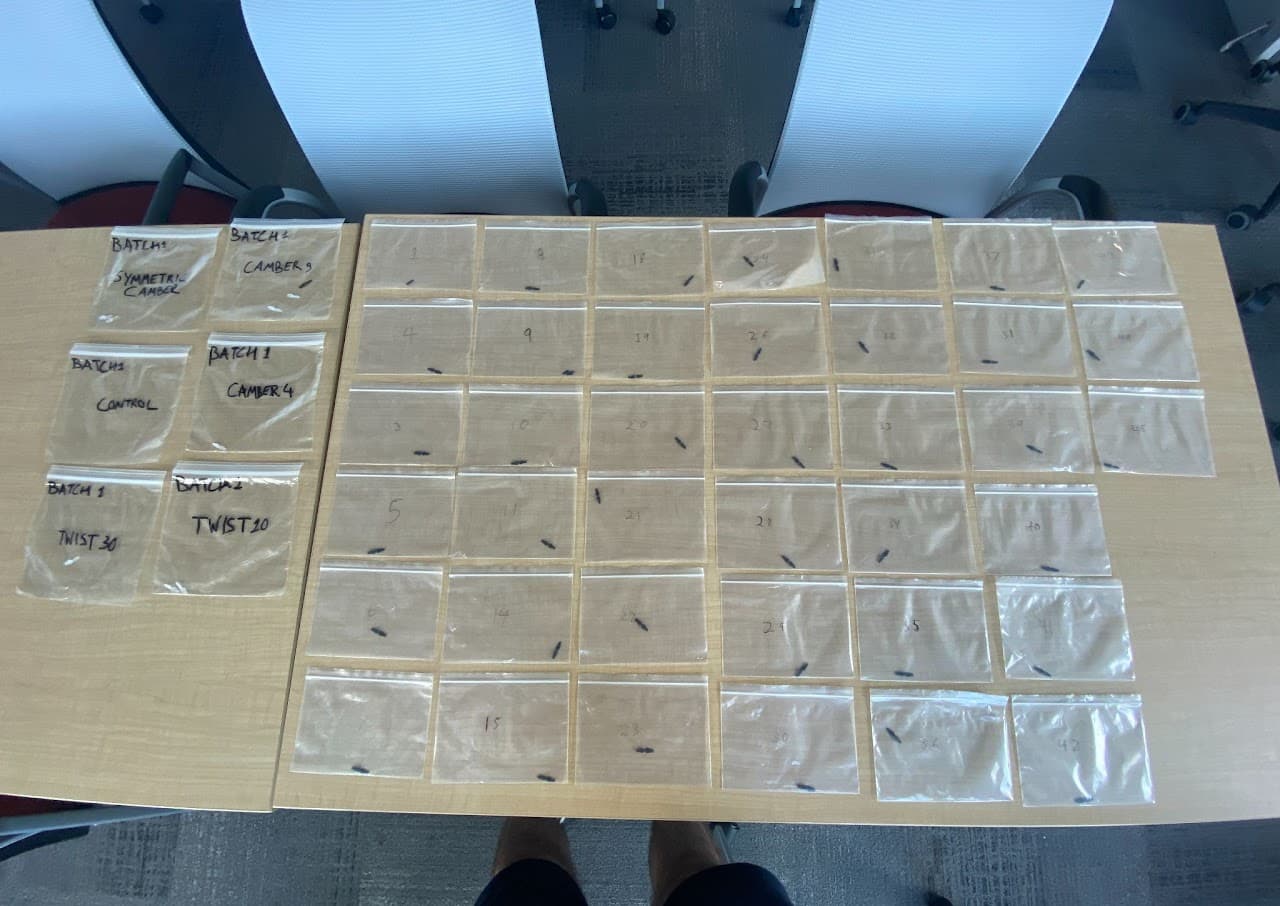
- Propeller geometry search via Bayesian Optimization
- Bench tests and CAD iteration on micro-airfoils
- Drove L/D improvements that pushed MiniP toward more stable, higher-efficiency flight